
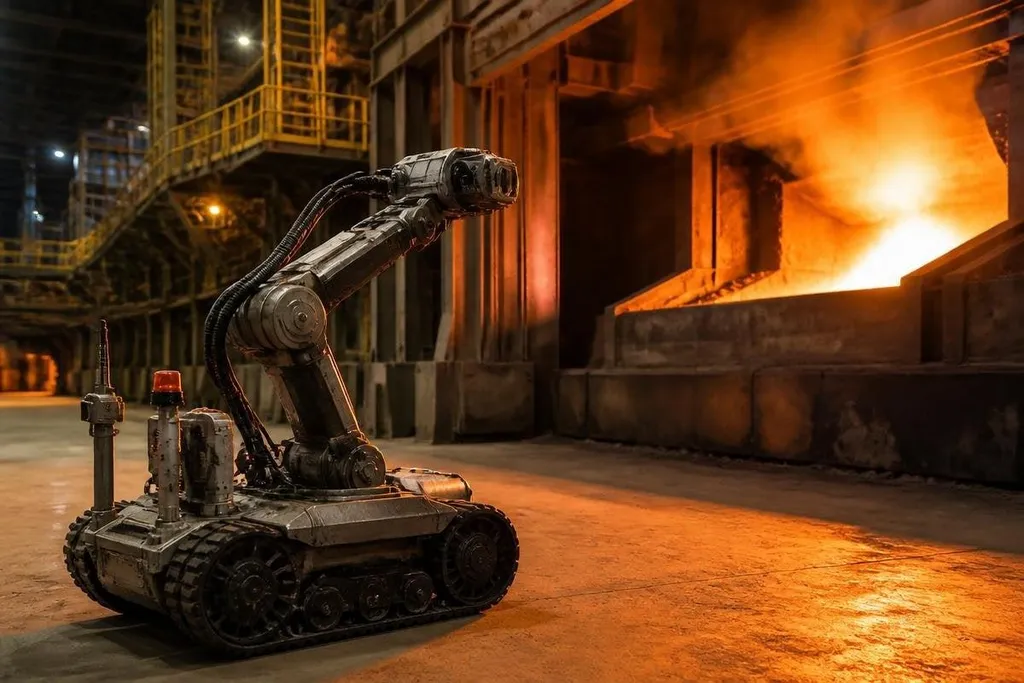
A robot near a furnace may face hot air, radiant heat, dust, and sudden temperature changes at the same time. Its survival depends on the whole design, from the outer shell to the motor seals and the software that limits motion.
- Heat shields block radiant energy before it reaches the electronics.
- Cooling systems move heat away from motors, batteries, and control boards.
- Sensors and software slow or stop the robot when temperatures reach set limits.
Where the heat comes from
Hot air is only one part of the problem. A robot beside a furnace can absorb infrared radiation from the furnace wall, even when the air around it is cooler. Motors also create heat as electrical power turns into movement, and batteries warm up during high-power tasks.
That gives engineers several temperatures to track. The outside shell may be hot, while a circuit board inside stays within its rated range. A motor winding can heat up long before the robot’s outer frame feels unsafe to touch.
Thermocouples and resistance temperature detectors measure these points. A thermocouple creates a small voltage that changes with temperature. The control system can use that reading to reduce motor current, slow the robot, or stop it before a part fails.
How the hardware handles heat
The first defense is distance. Designers place batteries, cameras, and control boards away from the heat source, then use metal shields or ceramic panels between those parts and the hot area. Shiny metal surfaces can reflect some radiant heat, while ceramic materials conduct less heat than many metals.
Cooling comes next. A heat sink spreads heat across a larger metal area so air or coolant can carry it away. Fans work in places with clean air, but dust, smoke, or hot air can make a sealed liquid-cooling loop a better choice.
Seals matter as much as cooling. An enclosure with a suitable IP rating can block dust and water, but an IP rating does not tell you how hot the enclosure may become. You still need the maker’s temperature limit for the complete robot, not only the camera or motor.
Moving parts need their own plan. Grease can thin out or break down at high temperature, so a robot may need high-temperature lubricant, metal seals, or bearings made for the heat range. Cable jackets also need a rated material, since a melted cable can stop the robot even when its main computer is fine.
What changes during a hot task
Heat reduces the time a robot can work before it needs to slow down or leave the area. A robot that lifts a load, climbs a slope, or drives through soft ground draws more current, which adds more heat inside the motors and battery.
That is why the task plan matters. Short inspection runs may work near a hot process, while long autonomous patrols may need cooling pauses, a tether, or a route that keeps the robot farther from the source. The same robot can handle one job and fail at another because the heat load is different.
A heat rating means little without the robot and task named beside it. Robot 24 reports can help you compare a maker’s stated temperature limit with the job described before you judge whether the machine can stay near the process.
Some systems use a heat-resistant umbilical cable for power, data, and coolant. That keeps heavy batteries away from the hot zone, but the cable can limit movement and create a snag risk. Wireless control removes the cable, yet it leaves the robot responsible for carrying its own power and managing its own heat.
What remains unproven
A temperature figure on a data sheet may describe a short operating period in still air. It may not cover direct radiation from a furnace, repeated starts, dust, vibration, or a full payload.
The test method matters. Ask how long the robot ran, how far it stood from the heat source, what load it carried, and which part reached its limit. A camera rated for hot conditions does not prove that the battery, seals, drive motors, and wiring can last there too.
I'd choose a slower robot with a clear heat test over a faster one with a larger temperature claim. A stopped inspection robot is a repair job; damaged hardware near a furnace can become a safety problem.
What to check before deployment
Use this checklist before placing a robot in a hot work area:
- Map the heat: record air temperature, surface temperature, and radiant heat at the robot’s planned route.
- Check the full system: read limits for the battery, motors, cables, seals, sensors, and control box.
- Set thermal stops: confirm which readings reduce speed, cut power, or send the robot back.
- Test the real task: run the robot with its planned payload, travel speed, duty cycle, and cable setup.
- Plan recovery: give technicians a safe way to remove or cool the robot after a fault.
A robot built for extreme heat is a system of barriers, sensors, cooling paths, and operating rules. Before purchase, ask for the test conditions and the part that failed first. That answer tells you more than the highest temperature printed on the brochure.